
Affirmations App: What Actually Works (and What Doesn't)
Affirmations work – if you use them correctly. What the research says, how I use them daily, and why they're part of my morning routine.
Levin
5/10/20261 min read
Affirmations App: What Actually Works (and What Doesn't)
Affirmations have a reputation problem. Too many people associate them with blind optimism or self-help clichés. Standing in front of a mirror saying "I am wealthy and successful" when you don't believe it – that's genuinely useless.
But that's not how affirmations work when you use them correctly.
What Affirmations Actually Are
Affirmations are short, positive statements about beliefs or behaviors you want to reinforce in yourself. Not as a magic formula – but as a deliberate counterweight to negative thought patterns.
Psychological research shows that self-talk genuinely influences behavior. What we tell ourselves daily – whether out loud or internally – affects how we feel and how we act.
The Difference Between Weak and Strong Affirmations
Weak affirmation: "I am rich and successful." (If you don't believe this, it creates cognitive dissonance.)
Strong affirmation: "I make decisions every day that move me closer to my goals." (This is verifiable, real, and activates a specific behavior.)
The key is specificity and believability. The affirmation has to describe something you genuinely believe is possible.
How I Use Affirmations Daily
I read my affirmations in the morning, right after journaling. Five to ten short statements. It takes two minutes.
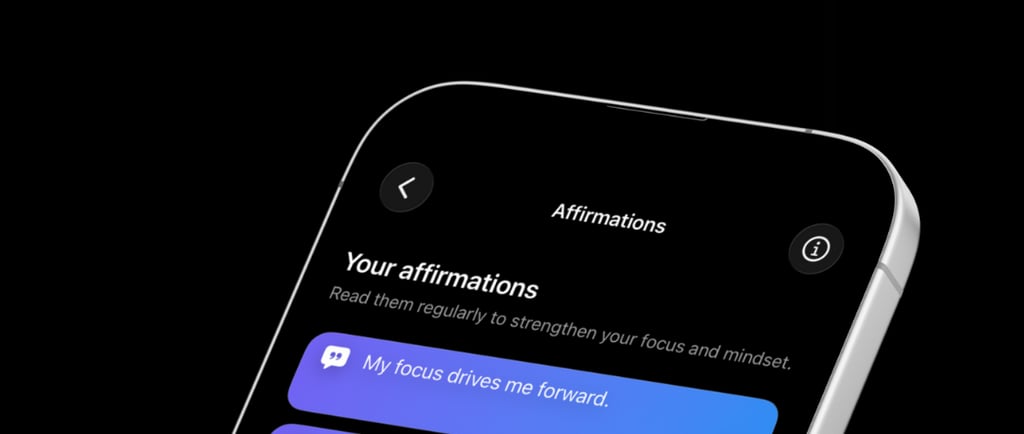
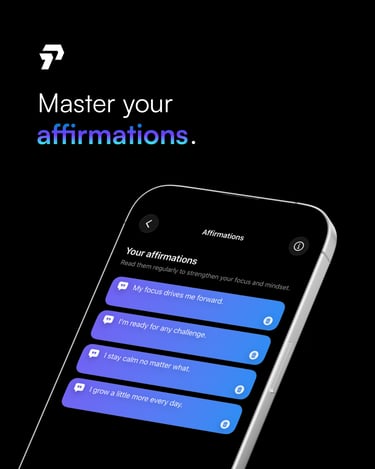
PROG has a dedicated affirmations section. You add your own, pull them up daily, and set reminders. No separate tool, no extra step.
More at progapp.com.
Tags: affirmations app · daily affirmations app iphone · positive affirmations app · affirmation reminder app · morning affirmations app · self talk app · mindset app · affirmations routine · daily positive affirmations · law of attraction app
© 2026. All rights reserved.
Support E-Mail